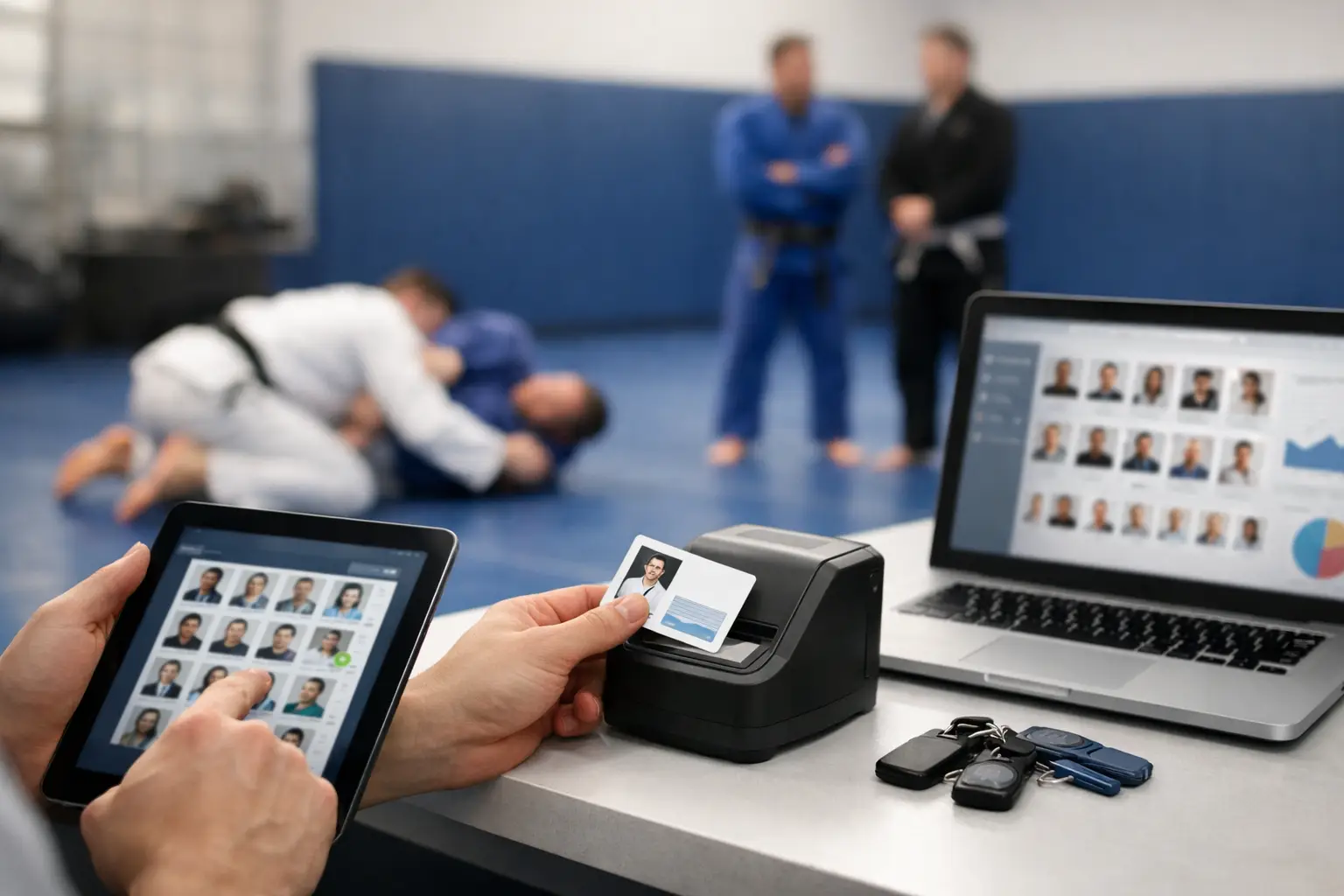
A packed 6:30 p.m. class can hide a costly problem. A student checks in under the wrong program, a parent assumes their child attended twice that week, and a coach later tries to remember who has actually been training consistently. A martial arts attendance tracking system should do more than count bodies at the door. For a Brazilian Jiu-Jitsu academy, it should create a reliable record of mat time, program participation, access eligibility, and progress without pulling the owner off the mats.
That distinction matters because BJJ attendance affects decisions that are personal and operational. It informs promotion conversations, helps staff spot students who are drifting away, confirms who was present for a class, and gives families a clearer view of their training. The right system supports those decisions. It does not pretend to make them for the coach.
What a Martial Arts Attendance Tracking System Must Do for BJJ
Generic gym check-in software usually treats attendance as a door scan. BJJ academies need more context. Adult Gi, no-gi, kids programs, fundamentals classes, competition training, and open mat do not always carry the same meaning for access or progression. A good record needs to show which class a student attended, when they checked in, and whether that class fits the membership plan and program they are enrolled in.
The system also needs to work during the realities of academy operations. Owners are teaching. Instructors are setting up class. Front-desk coverage may be limited or nonexistent. If check-in requires a staff member to search a roster and manually correct every exception, the data will become incomplete the first busy evening.
Reliable options usually include a student portal, a front-desk kiosk, and QR check-in. Multiple methods are useful because different classes run differently. A kids class may benefit from a parent or staff-assisted kiosk check-in. Adult students may prefer a quick QR scan before drilling begins. The key is that each method writes to the same attendance record rather than creating separate, conflicting logs.
Check-in windows matter, too. If students can check into a class hours early or after the next class begins, the record loses value. Configurable windows keep attendance connected to the actual schedule while still allowing a reasonable buffer for early arrivals and a late student coming in from work.
Attendance Should Connect to the Rest of the Academy
Attendance data becomes useful when it is connected to the work staff already needs to do. A student who checks into a no-gi class should appear on the appropriate roster. If their membership only allows two classes per week or excludes that program, staff should be able to see the issue clearly and handle it according to academy policy.
This is also where billing and attendance need to meet without becoming punitive. A student in a short grace period after a failed payment may need a reminder and a conversation, not a public rejection at the kiosk. When plans, access rules, and dunning policies are connected, staff can apply the academy's policy consistently instead of improvising in front of other members.
For family accounts, the record should be equally clear. A parent may be responsible for two kids in different programs, while also training in an adult class. Attendance should remain attached to the individual student, while billing and household communication stay organized at the family level. That reduces the usual stream of messages asking whether a child was enrolled, checked in, or eligible for a particular class.
Multi-location academies have another requirement: a student who cross-trains should not become a duplicate record. Their home academy, rank, and attendance history need to remain understandable across linked locations. The operating model should recognize one student as one person, not treat regular cross-training as an administrative exception or a second charge.
Mat Time Is Evidence, Not a Promotion Button
For BJJ, the strongest reason to improve attendance is not surveillance. It is better evidence for coaching decisions.
Mat-hour tracking can show whether a student has trained consistently enough to be considered for the next stripe or belt. It can also help a coach distinguish between someone who has attended for years but trains sporadically and someone who has built meaningful recent time on the mat. But hours alone are never a complete promotion standard. Skill, technical understanding, attitude, safety, competition experience where relevant, and the coach's judgment all matter.
That is why promotion workflows should be explainable. A system can use a configurable progression formula by belt, program, age eligibility, and mat-time expectations to identify students who may be ready or almost ready. It can surface the right conversation before a promotion cycle. The final promotion should remain manual, with a full audit trail showing what changed, who approved it, and when.
This approach reduces promotion politics without turning rank into an algorithm. Students and parents can understand that consistency is visible and that standards exist. Coaches retain the authority to account for the things no attendance report can measure: technical maturity, composure, conduct, and readiness to represent the next rank.
For kids programs, this balance is especially important. Attendance can support consistent expectations, but age-appropriate criteria and instructor judgment must remain part of the process. A seven-year-old's development does not map neatly to the same logic as an adult blue belt's training history.
Use Trends to Start Retention Conversations Earlier
Attendance is also one of the clearest retention signals an academy has. The student who misses one week may be traveling. The student who goes from three weekly sessions to none for a month may need a check-in from the academy before they quietly cancel.
A useful system makes those trends visible without creating unnecessary noise. Staff should be able to review recent attendance, streaks, and enrollment status, then decide what outreach fits. A new white belt who disappears after three classes needs a different message than a long-term purple belt managing an injury or work travel.
Students can benefit from seeing their own attendance history and streaks in a portal. Used well, that visibility reinforces a simple habit: show up. It should not become a leaderboard that pressures people to train through illness, injury, or family obligations. The academy sets the culture around the data.
A Practical Setup for Better Check-In
Before choosing or configuring a system, define the rules that make attendance meaningful at your academy. Start with your programs and schedules. Adult Gi, no-gi, kids, fundamentals, competition classes, and open mat should be clearly named and connected to the correct roster and access rules.
Next, decide who can check in and how. Give students a self-service option, but make sure instructors and staff can confirm or correct attendance when needed. A student may arrive late after the check-in window. A child may be dropped off by a parent who does not use the portal. Exceptions will happen, so the system needs controlled staff edits rather than a rigid process that creates bad data.
Then establish what attendance contributes to progression. This is not the same as publishing a promise that a certain number of classes earns a belt. Define internal guidance for mat hours, recent consistency, stripes, and age eligibility. Let head coaches review ready and almost-ready views before promotion cycles, while preserving manual authority and an audit trail.
Finally, train staff on the operational moments that cause confusion: frozen enrollments, overdue balances, make-up classes, program changes, cross-training, and missed check-ins. The system should make policy easier to enforce fairly, not force staff to invent policy on the spot.
Choose Accuracy Over More Software
A separate attendance app can create more work if it does not share schedules, rosters, memberships, and student records with the rest of the academy. Staff end up reconciling spreadsheets, explaining mismatched totals, and wondering which system is correct. That is time better spent coaching, onboarding new students, or speaking with a parent after class.
ControleHQ approaches attendance as part of a connected BJJ operating system: portal, kiosk, and QR check-in feed the same academy record used for program access, mat hours, billing status, and coach-led progress review. Core features are available across academy sizes, and linked-academy students count once at their home academy rather than becoming duplicate accounts.
The best attendance system is not the one with the most reports. It is the one your students will actually use, your staff can trust on a busy night, and your coaches can rely on when the next promotion conversation comes around.