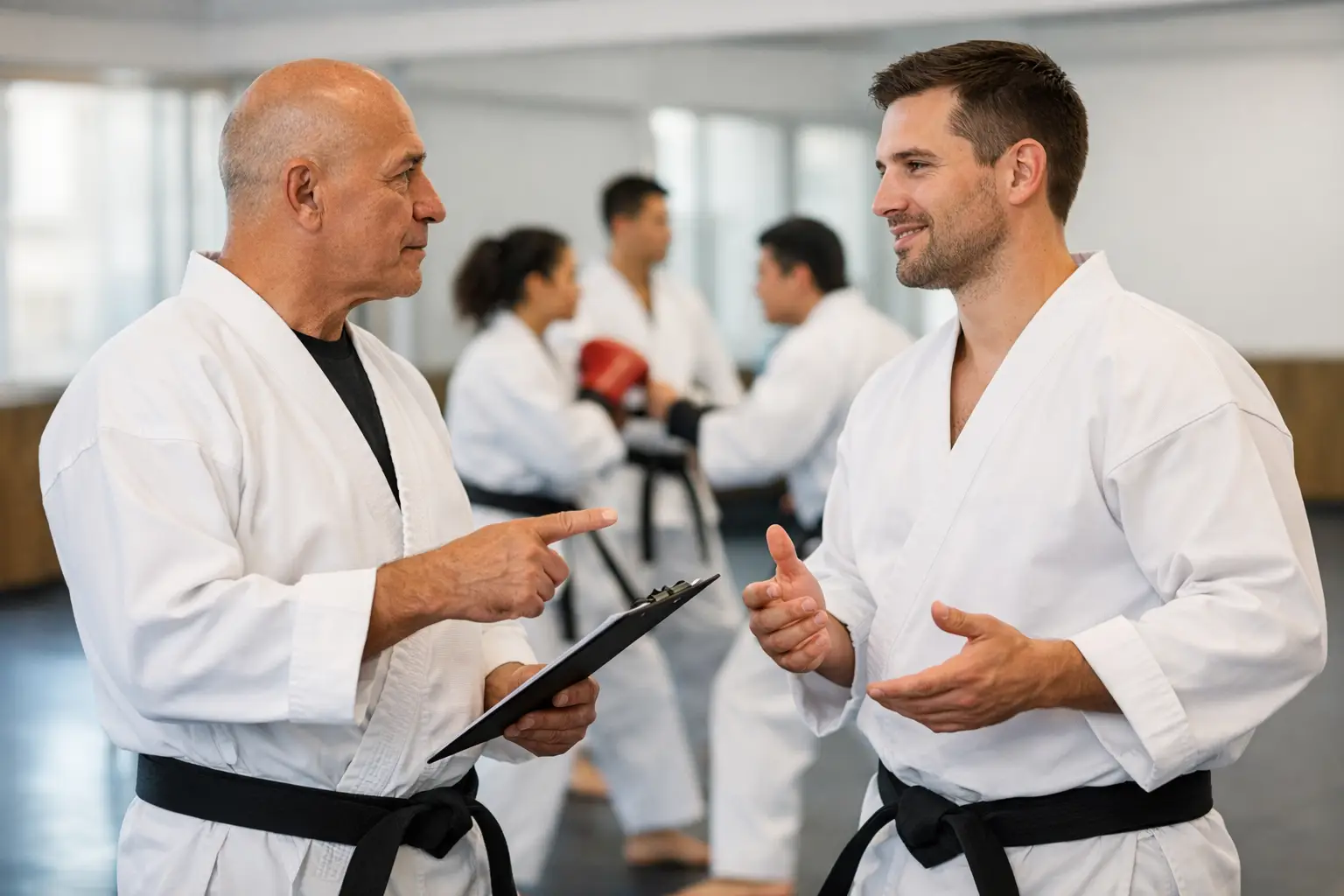
At 5:40 p.m., a coach texts that they cannot make the 6:30 adult gi class. The problem is not simply how to find a substitute martial arts instructor. It is whether the person stepping onto the mat can run a safe class, handle the room, follow your academy’s standards, and leave students feeling that their training time mattered.
For a Brazilian Jiu-Jitsu academy, last-minute coverage is an operations issue with coaching consequences. A missed class damages consistency. The wrong substitute can do more damage: a kids class loses structure, a white belt receives poor guidance, or a student assumes a casual comment was a promotion promise. The answer is not a larger group text when someone calls out. It is a defined coverage system built before the schedule gets tight.
Build a Substitute Instructor Bench Before You Need One
A reliable substitute bench starts with an honest definition of who is qualified to cover which classes. A skilled competitor is not automatically the right person for a room full of six-year-olds. A respected brown belt may be an excellent technical coach but unavailable for recurring morning classes. Coverage should reflect teaching ability, program familiarity, and the level of authority required.
Create an approved backup list by program, not one generic list for the entire academy. Adult gi, no-gi, fundamentals, competition training, and kids programs each have different needs. For every approved substitute, document the classes they can cover, the times they are generally available, whether they can open or close the academy, and whether they can handle attendance, waivers, and parent questions.
The list should also distinguish between emergency coverage and regular coverage. An instructor who can keep an adult class moving with a prepared lesson may not be ready to take over a six-week kids curriculum. That is not a judgment on rank. It is a practical distinction that protects students and the academy.
For multi-location academies, build this list across the organization where appropriate. A student or instructor who cross-trains at a linked location may know the culture and systems well enough to help, but do not assume that familiarity alone grants access. Confirm their role, program permissions, and teaching expectations before putting them on the schedule.
How to Find a Substitute Martial Arts Instructor Who Fits
When a coverage need appears, work through the roster in a consistent order. Start with the backup already assigned to that class, then contact approved instructors for that specific program. Only widen the search after those options are exhausted. This prevents the common mistake of filling a slot quickly with someone who is technically available but operationally unprepared.
A substitute should be evaluated on more than belt rank. Ask whether they have taught that student group, understand the day’s curriculum, know the academy’s safety rules, and can manage the class start to finish. For kids programs, add parent communication, pickup procedures, behavior management, and bathroom or injury protocols. For adult classes, consider whether the instructor can safely coach beginners and keep sparring rounds appropriate for the mix of students in attendance.
If you bring in a coach from another academy, set expectations in writing before they teach. Confirm compensation, arrival time, attire, curriculum boundaries, access to the building, and who handles incidents. Guest coaching can work well, especially when it gives students a valuable perspective, but it should not create confusion around rank, affiliation, or promotion authority.
A simple approval process helps prevent improvisation. Before someone is added to the backup pool, verify four things:
- They are qualified for the specific program and age group.
- They understand the academy’s class format, safety standards, and culture.
- They know what they can and cannot decide, especially around promotions and billing exceptions.
- They can access the schedule, roster, and attendance process appropriate to their role.
This is not bureaucracy for its own sake. It gives a substitute enough structure to teach confidently without giving them authority they have not been asked to carry.
Give Every Backup a Clear Class Plan
Substitutes struggle when the only instruction is, “Just teach something.” That approach creates inconsistent coaching and puts the substitute in an awkward position. A short class plan is better: warm-up expectations, the curriculum theme, a few approved techniques or drills, sparring format, and any student situations that need awareness.
The plan does not need to script every minute. Experienced coaches need room to adjust when attendance is low, when several brand-new students arrive, or when an injury limits the planned lesson. But it should define the non-negotiables. If your fundamentals program is working through closed guard retention, a substitute should not replace the full lesson with advanced leg lock entries because that is what they prefer teaching.
For kids classes, consistency matters even more. Keep the same opening routine, mat rules, reward structure, and dismissal process. Parents judge reliability through the details: whether class begins on time, whether their child is supervised, and whether the coach can explain what the group worked on. A substitute who knows the routines can maintain trust even if the head coach is absent.
Keep promotion decisions separate from coverage. A substitute can observe, encourage, and make notes, but stripes and belts should remain manual decisions under the academy’s established process. If a student asks about rank, the correct answer is that progress is reviewed against the academy’s standards by the people responsible for promotions. That protects both the student and the substitute from vague promises.
Confirm Coverage Before Students Arrive
A backup plan only works if people know it has been activated. The primary instructor, substitute, and staff member responsible for the schedule should all receive a clear confirmation. Avoid vague messages such as “I think Mike has it.” State who is teaching, which class they are covering, and whether the regular instructor is expected back for the next session.
Your schedule should show both the primary and backup instructor whenever possible. A confirmation workflow is especially useful for recurring classes, where a coach may be traveling, sick, or covering another location. ControleHQ supports primary and backup instructor confirmations alongside schedules and role-based access, so an owner is not chasing answers through personal text threads while trying to teach their own class.
Student communication should be proportional to the change. You do not need an announcement every time an approved assistant covers a familiar class. Send one when the substitute is new to the group, when the schedule changes, or when a kids program needs a different pickup contact. Keep the message direct: class remains on schedule, the named coach will lead it, and students should check in as usual.
That last point matters. Continue normal check-in and attendance procedures during substitute-led classes. Attendance is still part of a student’s mat-time record, their training streak, and the academy’s view of retention. Skipping it because a coach is covering creates gaps that staff must untangle later.
Protect Standards Without Undercutting the Substitute
A good substitute needs real authority on the mat. Students should not treat them as a placeholder or negotiate the class plan because the usual coach is away. Owners and head coaches set this expectation by introducing backups properly and using them regularly enough that students recognize them.
At the same time, their authority should have clear boundaries. A substitute can enforce safety rules, adjust sparring pairings, stop unsafe behavior, and address ordinary conduct issues. They should know who to contact for serious injuries, parent complaints, billing questions, facility problems, or conflicts involving rank and discipline.
This is where a written incident process earns its place. After class, the substitute should record anything that requires follow-up: an injury, a student who left early, a parent concern, a conflict, or a technical issue with the facility. Notes should be factual and brief. The goal is continuity, not turning every substitute class into paperwork.
For promotion-related observations, keep the record equally specific. “Consistent attendance and strong improvement in guard passing” is useful feedback. “Ready for blue belt” may be premature without the full context of mat hours, technical development, competition performance where relevant, and the head coach’s judgment. Explainable standards reduce promotion politics, while manual authority keeps the final decision with the coaches who own it.
Review Coverage Like Any Other Academy Process
After a substitute teaches, ask two questions: did the class run safely and did it feel consistent with the academy? You may learn that a backup is excellent with adult no-gi but needs more support in kids classes. You may also find that the schedule itself relies too heavily on one coach.
Review coverage patterns monthly. Repeated call-outs on a particular class may point to an overloaded instructor, a time conflict, or a weak backup bench. If the same two people cover every emergency, compensate and schedule them accordingly rather than treating their reliability as unlimited goodwill.
The best time to find a substitute martial arts instructor is not when the first students are already warming up. Build the bench, define the limits, and give backups the information they need. Then a coach’s absence remains a manageable operational change instead of a disruption students can feel on the mat.